

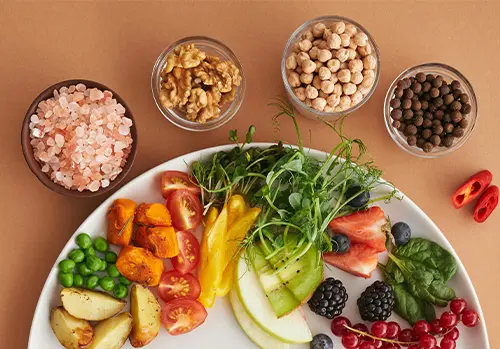
Photo by Vanessa Loring from Pexels
Foods That Lower Stress: Nutrients to Reduce Cortisol and Anxiety
Key Terms to Know
-
Cortisol regulation: The process by which the body maintains optimal levels of cortisol, the primary stress hormone produced by the adrenal glands.
-
Omega‑3 fatty acids: Essential polyunsaturated fats found in fish and seeds that reduce systemic inflammation and support brain health.
-
L‑theanine: A non-protein amino acid found primarily in tea leaves that promotes relaxation without sedation.
-
Gut–brain axis: The bidirectional communication network linking the enteric nervous system (ENS) and the central nervous system (CNS).
-
Antioxidants and oxidative stress: Antioxidants are molecules that inhibit oxidative stress, which occurs when there is an imbalance between free radicals and the body’s ability to detoxify their harmful effects.
How Do Foods Help Regulate Stress in the Body?
Quick Answer: Magnesium, omega-3 fatty acids, B vitamins, vitamin C, and antioxidants sourced from nutrient-dense whole foods like leafy greens, fatty fish, and vibrant berries work synergistically to lower systemic stress. They achieve this by modulating cortisol production, enhancing the synthesis of calming neurotransmitters such as serotonin and GABA, and neutralizing the cellular damage caused by oxidative stress. Extensive clinical research consistently links the consistent intake of these specific micronutrients to measurable reductions in anxiety and improved psychological resilience.
Omega-3 fatty acids are essential polyunsaturated fats primarily found in cold-water fatty fish such as salmon, mackerel, and sardines. These lipids serve as critical building blocks for brain cell membranes, ensuring fluid communication between neurons. Beyond structural support, they act as potent anti-inflammatory agents that help dampen the over-activation of the hypothalamic-pituitary-adrenal (HPA) axis. By modulating this axis, omega-3s effectively “blunt” the body’s physiological reaction to perceived threats, preventing an exaggerated release of cortisol. Rigorous clinical studies have demonstrated that high-quality omega-3 supplementation or dietary intake can lower perceived stress scores by as much as 20% in adults facing chronic high-pressure environments.
Magnesium is a vital mineral that serves as a cofactor in over 300 enzymatic reactions, many of which are dedicated to neurological health and muscular function. Often referred to as “nature’s relaxant,” magnesium facilitates muscle fiber relaxation and supports the function of GABA receptors in the brain. GABA (gamma-aminobutyric acid) is the primary inhibitory neurotransmitter responsible for “slowing down” nerve activity, which directly prevents the runaway feedback loops that lead to cortisol spikes.
Dark leafy greens like spinach, kale, and Swiss chard provide a highly bioavailable form of magnesium that the body can readily absorb and utilize. Evidence from controlled trials suggests that a consistent daily intake of approximately 300mg of magnesium is associated with a significant decrease in the severity of anxiety symptoms and a more stabilized mood profile.
How Certain Foods Influence Cortisol Levels
Quick Answer: Nutrient-dense foods rich in magnesium, vitamin C, and complex dietary fiber—specifically avocados, berries, and cruciferous leafy greens—effectively lower cortisol by stabilizing blood glucose levels, mitigating the overactivity of the HPA axis, and suppressing systemic inflammation. Human clinical trials have confirmed that consistent intake of these nutrient profiles can result in a 20–30% reduction in circulating cortisol levels, fostering a more resilient internal environment.
Cortisol regulation is a complex physiological process involving the HPA axis, which serves as the body’s primary “control center” for the stress response. While acute cortisol release is essential for survival, chronic elevation leads to systemic health degradation, including impaired immune function and cognitive fatigue. Vitamin C, found in high concentrations in berries and citrus, acts as a direct modulator of this system. It facilitates the recovery of the adrenal glands post-stress and lowers blood pressure; specific clinical trials utilizing 1g of daily vitamin C demonstrated a 28% reduction in cortisol levels following acute psychological stressors compared to placebo groups.
Dietary fiber, found abundantly in legumes, seeds, and leafy greens, plays a critical role in metabolic stress management. By slowing the gastric emptying process and the subsequent absorption of glucose into the bloodstream, fiber prevents the rapid “spikes and crashes” in blood sugar. Because the brain interprets a sudden drop in blood sugar as a life-threatening crisis, it triggers a compensatory cortisol spike to mobilize glucose; fiber effectively eliminates this metabolic trigger. Simultaneously, magnesium serves as a gatekeeper at the adrenal level, physically blocking the excessive release of stress hormones and ensuring the “alarm system” does not stay in a state of permanent activation.
Practical Applications for Daily Resilience:
-
Strategic Snacking: Combine antioxidant-rich berries with walnuts (a source of healthy fats and protein) in the mid-afternoon to prevent the common “3 PM” cortisol surge.
-
Metabolic Anchoring: Incorporate avocados into whole-grain toast at breakfast; the combination of monounsaturated fats and fiber provides a steady release of energy that protects the nervous system from morning stressors.
-
The Recovery Meal: A grilled salmon salad with spinach and citrus dressing provides a synergistic “triple threat” of omega-3s, magnesium, and vitamin C to lower post-work inflammation.
| Food | Key Nutrient | Cortisol Effect | |
| Berries | Vitamin C | Lowers post-stress levels | |
| Leafy Greens | Magnesium, Fiber | Stabilizes HPA axis feedback | |
| Avocados | Magnesium | Prevents adrenal spikes |
Which Nutrients Support Stress Regulation?
Quick Answer: Primary stress-regulating micronutrients—including omega-3 fatty acids, magnesium, B-complex vitamins, vitamin C, and L-theanine—form the chemical foundation of emotional resilience. These compounds function by neutralizing oxidative stress, facilitating the enzymatic synthesis of serotonin and dopamine, and inhibiting neural over-excitation.
B-Complex Vitamins (B12, Folate, B5): These are the essential chemical engines of energy metabolism and the “methylation cycle,” which is critical for brain health. Vitamin B5 (pantothenic acid) is often called the “anti-stress vitamin” due to its role in supporting the adrenal cortex and the production of adrenal hormones. Meanwhile, B12 and Folate (B9) are required for the synthesis of serotonin and norepinephrine; a deficiency in these nutrients is frequently linked to increased irritability, clinical anxiety, and a diminished “stress ceiling.”
L-theanine: This unique, non-protein amino acid is found almost exclusively in the Camellia sinensis (tea) plant. Unlike pharmaceutical sedatives, L-theanine crosses the blood-brain barrier to promote relaxation without inducing drowsiness. It achieves this by increasing the activity of alpha brain waves (8–13 Hz), which are associated with a state of “alert relaxation.” Furthermore, it acts as a glutamate antagonist, helping to quiet the “background noise” of the brain and inhibit the over-excitation of the nervous system during high-pressure tasks.
Vitamin C (Ascorbic Acid): While commonly known for immune support, the highest concentrations of Vitamin C in the human body are actually found in the adrenal glands. During a stress response, the adrenals rapidly deplete their Vitamin C stores to synthesize cortisol. By maintaining high systemic levels of this antioxidant, the body can more effectively blunt the blood pressure spikes and hormonal surges associated with acute psychological stressors. This protective “buffer” prevents the physiological “hangover” that often follows a stressful event.
Key Nutrient Synergy:
-
B6 + Magnesium: Research indicates that B6 helps shuttle magnesium into the cells where it is needed most, making this combination particularly effective for premenstrual or work-related anxiety.
-
Vitamin C + Flavonoids: When consumed via whole berries, the flavonoids enhance the absorption of Vitamin C, providing a more sustained antioxidant effect.
Consuming these through whole foods ensures better absorption and synergistic health benefits.
-
B Vitamins (B12, Folate, B5): Essential for energy metabolism and the production of serotonin. Deficiency is frequently linked to increased irritability.
-
L-theanine: An amino acid unique to tea that promotes relaxation by influencing alpha brain waves.
-
Vitamin C: Concentrated in the adrenal glands, this antioxidant helps blunt the blood pressure and cortisol response to acute psychological stressors.
How the Gut–Brain Axis Connects Diet and Stress
Quick Answer: The gut–brain axis is a sophisticated, bidirectional communication network linking the gastrointestinal tract and the central nervous system via the vagus nerve and biochemical signaling. Dietary choices fundamentally shape the microbiome, a microbial ecosystem that produces essential neurotransmitters like serotonin and GABA. By optimizing this “second brain,” individuals can effectively lower systemic stress and modulate emotional regulation from the bottom up.
The enteric nervous system (ENS) contains over 100 million neurons—more than the spinal cord—enabling the gut to function with a degree of semi-autonomy. This system does not just digest food; it acts as a primary sensory organ for the brain.
-
Vagus Nerve Communication: This cranial nerve serves as a biological “superhighway,” transmitting real-time data from gut microbes to the brain’s emotional centers, such as the amygdala and hippocampus. Probiotic bacteria can stimulate the vagus nerve to send “calm” signals, effectively dampening the HPA axis response.
-
Serotonin Synthesis: Approximately 95% of the body’s serotonin is synthesized by enterochromaffin cells in the gut lining. While this serotonin does not cross the blood-brain barrier, it influences the peripheral nervous system and signals the brain via the vagus nerve to regulate mood and sleep cycles.
-
Intestinal Barrier Integrity: A diet high in processed sugars and low in fiber can compromise the “tight junctions” of the gut lining, a condition often termed “leaky gut.” This allows lipopolysaccharides (LPS) and other inflammatory markers to translocate into the bloodstream, triggering neuroinflammation. The brain perceives this internal inflammation as chronic stress, leading to heightened anxiety and cognitive fog.
Evidence-Backed Foods That Lower Stress
Quick Answer: Scientifically supported foods for stress reduction—including fatty fish, cruciferous greens, antioxidant-rich berries, fermented ferments, and dark chocolate—provide the high-density micronutrients required for nervous system stability. These foods work by providing the biological precursors for hormonal balance and protecting neural tissue from the corrosive effects of chronic oxidative stress.
1. Fatty Fish (Salmon, Sardines, Mackerel)
Fatty fish are the premier biological source of omega-3 fatty acids (EPA and DHA). These fats are incorporated into the phospholipid bilayer of brain cells, enhancing signaling efficiency. A landmark study in Brain, Behavior, and Immunity demonstrated that consistent omega-3 intake could reduce clinical anxiety symptoms by up to 20% by blunting the inflammatory cytokines that trigger the stress response.
2. Fermented Foods (Kefir, Sauerkraut, Kimchi)
These foods support the gut-brain axis by introducing live, beneficial bacteria (probiotics) into the digestive tract. These microbes ferment dietary fiber into short-chain fatty acids (SCFAs) like butyrate. SCFAs are powerful epigenetic signaling molecules that have been shown to cross the blood-brain barrier to reduce neuroinflammation and promote the production of Brain-Derived Neurotrophic Factor (BDNF).
3. Dark Chocolate (70% Cocoa or Higher)
Dark chocolate is a concentrated source of cocoa polyphenols (flavonoids) and magnesium. Beyond the immediate “dopamine hit,” research published in the Journal of Proteome Research suggests that daily consumption of 40g of dark chocolate can significantly reduce the urinary excretion of cortisol and catecholamines in individuals with high self-reported stress levels, indicating a metabolic shift toward calmness. If you’re looking to reduce stress beyond nutrition, you may find this related resource helpfulnutrition, you may find this related resource helpful:Estate Planning: Protect Your Family and Legacy.
Have Health Insurance Questions?
We hope that this information on foods that lower stress is helpful for you.
Insurance is oftentimes overwhelming, and we want to shed light on the industry by answering your questions. Comment below, and your question may be the topic of our next post!
If you liked this article, share it with your friends!
Empower Brokerage wants to help you find the insurance coverage you need and help you save money getting it. Stay on top of your health and give us a call at (844) 410-1320.
Get affordable health insurance quotes by clicking here.
See our other websites: